Secret Cradle
I’m in my last year of college, about to cross the threshold into my future. I thought the hardest test of my life would be finishing school—sleepless nights working on plates, juggling my program with extracurriculars, and carrying the heavy weight of expectation. But those struggles felt small compared to the weight of two faint lines that changed everything.
No, I can’t do this.
It felt as if the ground split beneath me. A strange lens bent my vision, distorting everything I thought I knew. The man I trusted—the father of my child—slipped into silence and left me to carry the weight alone. My dreams, bright and sharp just yesterday, blurred into shadows. Suddenly, every step forward felt like I was dragging a secret too heavy for my body to bear.
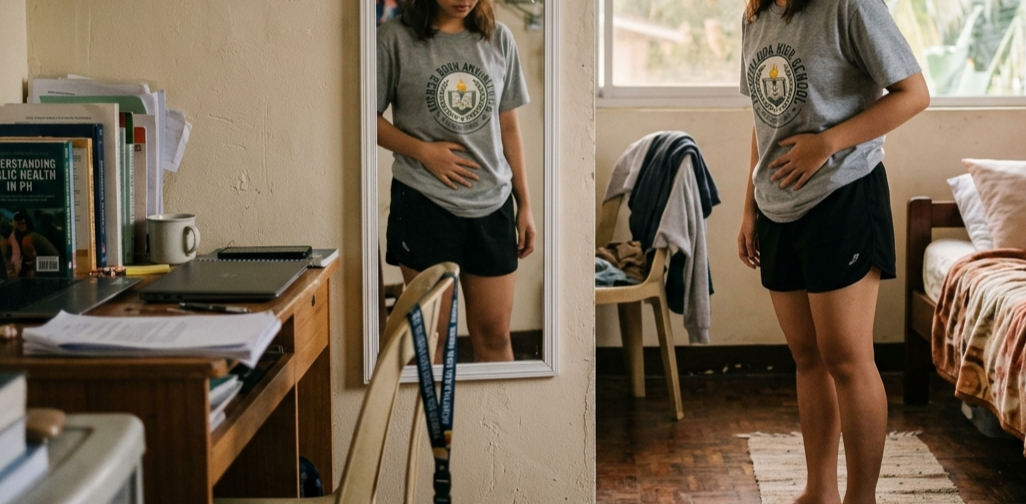
For months, I hid. I wore loose clothes and sweatshirts, forced smiles, and carefully chosen silences. I concealed my pregnancy not only from strangers but even from some of my closest friends.
One afternoon, a classmate invited me for coffee. We hadn’t seen each other in weeks, and I missed her company. But when I caught my reflection in the café window—the way my shirt clung differently to my stomach—I froze. They’ll notice. At the last minute, I texted: Sorry, not feeling well today. It wasn’t a lie, but it wasn’t the truth either.
At school, I carried my laptop, notebooks, and bag like shields. I avoided the cafeteria, skipped gatherings, and turned down celebrations as the semester neared its end. “You’ve been so quiet lately,” one of my friends messaged. My thumbs hovered over the screen for a long time. I wanted to tell her everything. I wanted to cry into her arms. But instead, I typed: Just busy. You know how it is with deadlines.
But secrets are heavy. And the more I tried to conceal, the more I felt consumed by shame. Eventually, the truth slipped out—not because I wanted it to, but because it became impossible to hide the growing bump and the endless excuses.
The first battle was not with my body, but with people. Their eyes—the disappointed ones—pierced me more deeply than words. Every question came like an arrow:
“What happened, Ana?”
“Where’s the father?”
Some asked softly, but even their gentleness carried judgment. Others didn’t bother to hide their dismay. And each time I opened my mouth, my voice cracked, as if the truth itself were ashamed of me.
How could I explain that he—the man who once promised to stand beside me—had vanished? How could I confess that love, which once felt like salvation, had turned into abandonment? Their silence told me what they thought: I had ruined myself. I had ruined my future.
There were nights I curled up in bed, staring at the ceiling, asking God if He had turned His face away from me too. The questions never stopped—inside or outside. Would I still be able to graduate? Would my friends still stay? Would my family forgive me? Would I still be able to enjoy my life? When would I ever repay my parents’ sacrifices if I was about to have this baby? Would I ever be enough for the child growing inside me?
Those negative thoughts nearly consumed me. I was on the verge of giving up, of ending everything. I was terrified, uncertain, and deeply disappointed.
Yet, amidst it all, my family gathered me back into their arms. My mother told me, “Not all brokenness destroys. Some cracks let the light in.” My friends brought laughter into my heavy days, reminding me I wasn’t only a mistake—I was still me. They became my armor against the stares, my shield against the whispers.
When Isaiah came, everything refracted into clarity. His first cry silenced every accusation I had ever carried in my chest. Yes, I was a single mother. Yes, the father walked away. Yes, the world looked at me with disappointment. But in his tiny hands, I found a strength I never knew existed.
I have learned that survival doesn’t always look like victory. Sometimes it looks like dragging yourself through shame, through doubt, through nights of despair—until morning comes, and you find yourself still standing, still breathing, still loving.
And now, when people ask me where Isaiah’s father is, I no longer bow my head. I tell them, “He may not be here, but I am. I can do this, and that is enough.”
Because brokenness has not ended me. It has only sharpened my sight. Through this cracked lens, I see my truth—distorted, yes, but also luminous.
Post a comment